• Skip to primary navigation
  • Skip to main content
  • Skip to primary sidebar

CMER

  • CMER
  • Home
  • CMER 2026
    • 2026 Information and Policies
    • 2026 Presenters
    • 2026 Mini-Retreat
    • 2026 Sessions
      • 2026 Standard Plenaries (Fri – Sun)
      • 2026 Standard Break Outs (Fri – Sun)
    • 2026 Schedule
    • 2026 Location
    • 2026 Registration
  • Past Retreats
    • CMER 2016
      • 2016 Speakers
      • 2016 Workshops
      • 2016 Schedule
      • 2016 Location
    • CMER 2017
      • 2017 Speakers
      • 2017 Sessions
      • 2017 Schedule
      • 2017 Location
    • CMER 2018
      • 2018 Speakers
      • 2018 Sessions
        • 2018 Plenaries
        • 2018 Break Outs
      • 2018 Schedule
      • 2018 Location
    • CMER 2019
      • 2019 Speakers
      • 2019 Sessions
        • 2019 Plenaries
        • 2019 Break Outs
      • 2019 Schedule
      • 2019 Location
    • CMER 2020
      • 2020 Speakers
      • 2020 Sessions
        • 2020 Plenaries
        • 2020 Break Outs
      • 2020 Schedule
      • 2020 Location
    • CMER 2022
      • 2022 Speakers
      • 2022 Sessions
        • 2022 Plenaries
        • 2022 Break Outs
      • 2022 Schedule
      • 2022 Location
    • CMER 2023
      • 2023 Presenters
      • 2023 Sessions
        • 2023 Plenaries
        • 2023 Break Outs
      • 2023 Schedule
      • 2023 Location
    • CMER 2024
      • 2024 Presenters
      • 2024 Sessions
        • 2024 Plenaries
        • 2024 Break outs
      • 2024 Schedule
      • 2024 Location
    • CMER 2025
      • 2025 Presenters
      • 2025 Sessions
        • 2025 Plenaries
        • 2025 Break Outs
      • 2025 Schedule
      • 2025 Location
  • Blog
  • Contact
  • About
  • Team Sites
    • Here to Glory (Dawn)
    • A Sacred Education (Jennifer)
    • a humble place (Rebecca)

Plutarch

December 17, 2025 by Karen Canon Leave a Comment

Plutarch Exam

This year, my daughter and I are reading Plutarch with a group of 15 students, aged 10 to 17. It is a mixed bag in terms of experience with Plutarch ; for some, this is their first exposure to Plutarch. Here is how we handled the first term’s Plutarch exam.
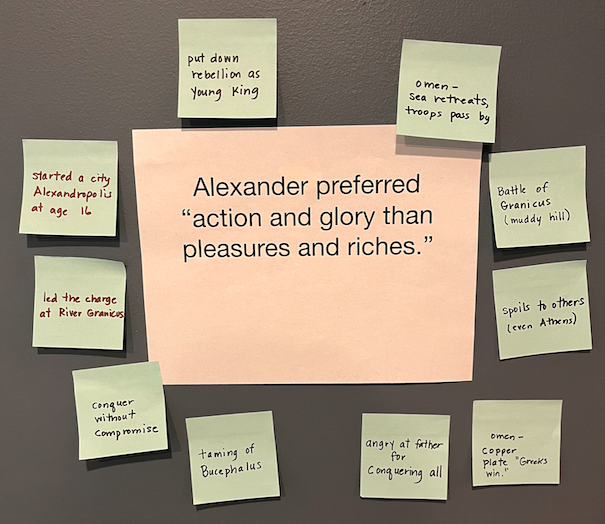
We are reading the Life of Alexander for the entire year, using Edwin Ginn’s text, which is abridged and annotated for schools using Clough’s translation. This term, we decided on an in-class group activity for the exam. It went like this. The week before the exam, each student wrote a list of stories they recalled from our readings thus far. Short answers like “Bucephalus” or “Homer’s Iliad” were acceptable. Then, as a group, they compared and compiled their lists into a single list.

For the day of the exam, I had re-written the anecdotes from their compiled list onto sticky notes and stuck them up on a wall. Working in small groups, their task was to choose the anecdotes that best matched a given character trait and demonstrated how Plutarch supported that idea. For example, one group had the statement that Alexander preferred “action and glory than pleasures and riches.” To support that claim, they chose stories from his life such as his founding a city at age 16 and his displeasure at his father’s conquering “all” and leaving little scope for Alexander.

The other groups had these statements: Alexander often acted with “resolution and magnanimity” rather than giving in to the masses, and Alexander was “a great lover of all kinds of learning and reading.”

Sometimes they challenged one another, “Why did you include this story?” and sometimes they had to decide if a story was a better example of one trait or another. It was a lively time, filled with great discussions and observations.

Give it a try and let me know what you think!

Karen Canon - Charlotte Mason Educational Retreat
Karen Canon

You may learn more about Karen on the CMER speaker page.

cme-kc.com/

December 5, 2019 by Karen Canon Leave a Comment

Plutarch, with Glee

Charlotte Mason Educational Retreat

What do you do when a book is hard? Plutarch’s Lives is hard. The temptation of the parent is to ask questions, to prompt, to remind. To basically do the mind work so that they ‘get it.’ This little nugget below is in my commonplace book and, at least once a year, I find myself returning to it.

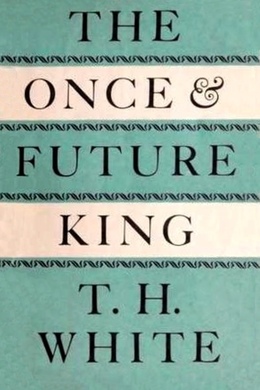
T.H. White wrote his version of the Arthurian legend in the years before and after World War II. The young Arthur, known as Wart, receives his education at the hands of a wizard, Merlyn.

The Wart did not know what Merlyn was talking about, but he liked him to talk. He did not like the grown-ups who talked down to him, but the ones who went on talking in their usual way, leaving him to leap along in their wake, jumping at meanings, guessings, clutching at known words, and chuckling at complicated jokes as they suddenly dawned. He had the glee of the porpoise then, pouring and leaping through strange seas. The Once and Future King, chapter V

[Read more…] about Plutarch, with Glee

Karen Canon - Charlotte Mason Educational Retreat
Karen Canon

You may learn more about Karen on the CMER speaker page.

cme-kc.com/

October 10, 2018 by Karen Canon 2 Comments

Plutarch’s Lives—Not Histories

Did you know that Plutarch was born, nearly 400 years later, in Chaeronea, the site of a very strategic battle fought by Alexander beside his father, Philip II of Macedon. I like to picture Plutarch as a young boy, re-enacting the battle with his chums, wiping out battalions of elite Theban soldiers over and over again in his imagination. Perhaps this close association is one reason that Alexander was his ‘hero of heroes’ as Edith Hamilton puts it; that Plutarch ‘loved him above all other men.’

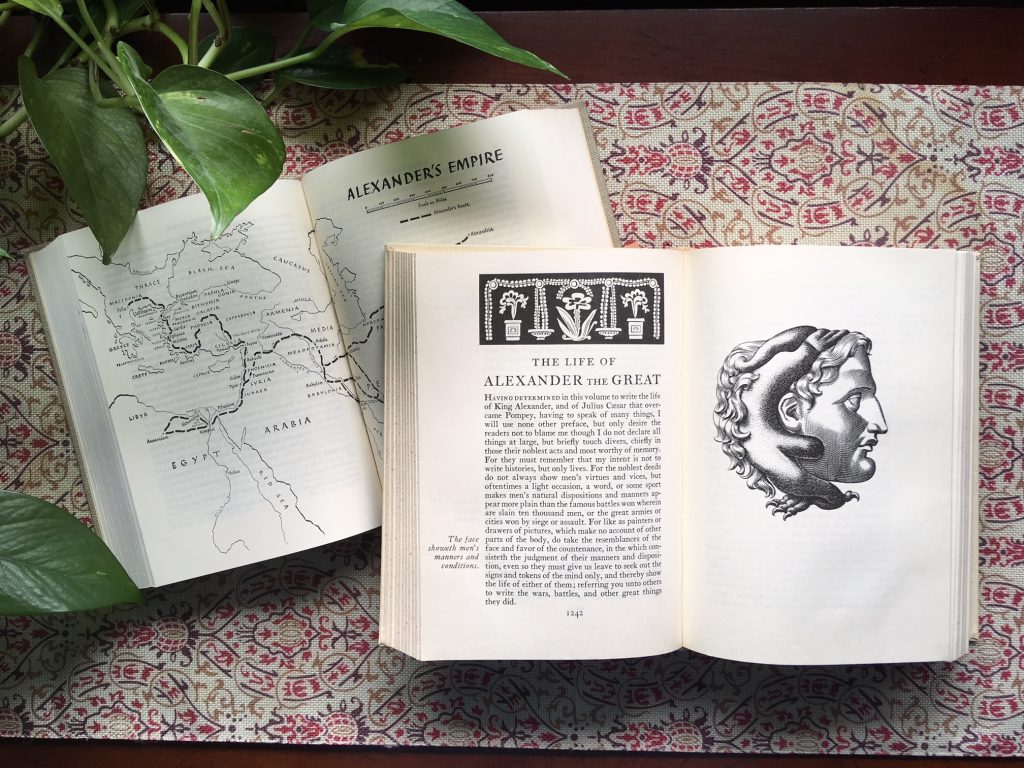
Every year, as I prepare for our study of Plutarch, I come back to the opening paragraph of the Life of Alexander the Great; it speaks to Plutarch’s purpose in writing and his choice of material. It helps me to remember to get behind the actions to the man who committed them.

What do you do to prepare for Plutarch’s Lives?

——————————————————

‘Having determined in this volume to write the life of King Alexander, and of Julius Caesar that overcame Pompey, having to speak of many things, I will use none other preface, but only desire the readers not to blame me though I do not declare all things at large, but briefly touch divers, chiefly in those their noblest acts and most worthy of memory. For they must remember that my intent is not to write histories, but only lives. For the noblest deeds do not always show men’s virtues and vices, but oftentimes a light occasion, a word, or some sport makes men’s natural dispositions and manners appear more plain than the famous battles won wherein are slain ten thousand men, or the great armies or cities won by siege or assault. For like as painters or drawers of pictures, which make no account of other parts of the body, do take resemblances of the face and favor of the countenance, in the which consisteth the judgment of their manners and disposition, even so they must give us leave to seek out the signs and tokens of the mind only, and thereby show the life of either of them; referring you unto others to write the wars, battles, and other great things they did.’ (Thomas North)

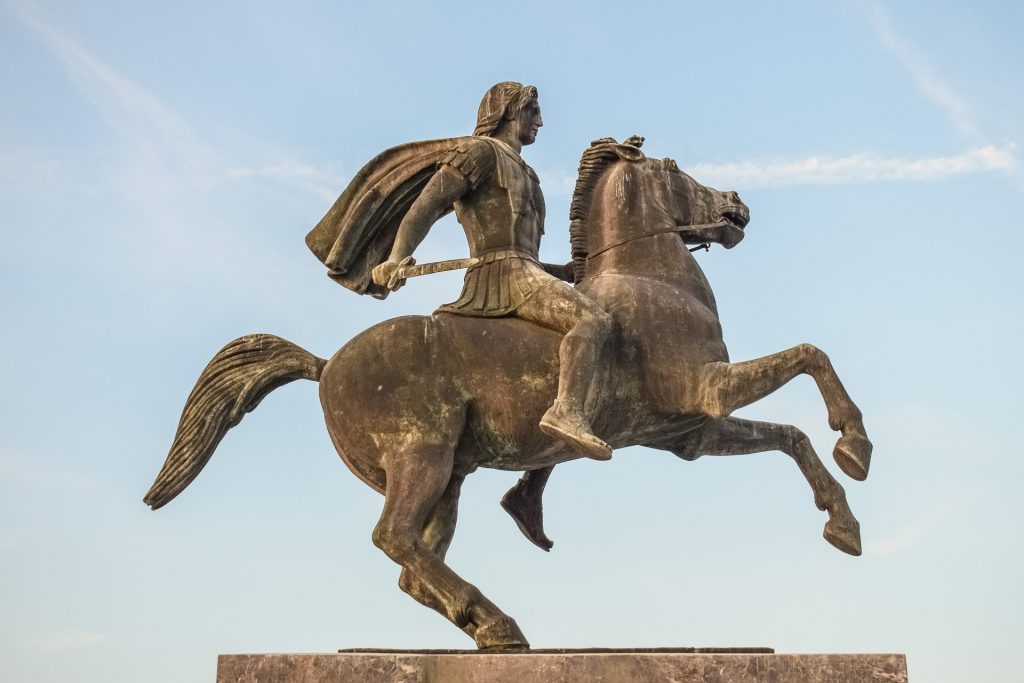
Photo Credit: MaxPixel.net

Or, the same paragraph from Plutarch: Selected Lives and Essays by Louise Ropes Loomis:

‘In writing for this book the lives of Alexander the king, and of Caesar, the conqueror of Pompey, I have before me such an abundance of materials that I shall make no other preface but to beg my readers not to complain of me if I do not relate all their celebrated exploits or even any one in full detail, but in most instances abridge the story. I am writing not histories, but lives, and a man’s most conspicuous achievements do not always reveal best his strength or his weakness. Often a trifling incident, a word or a jest, shows more of his character than the battles where he slays thousands, his grandest mustering of armies, and his sieges of cities. Therefore as portrait painters work to get their likenesses from the face and the look of the eyes, in which the character appears, and pay little attention to other parts of the body, so I must be allowed to dwell especially on things that express the souls of these men, and through them, portray their lives, leaving it to others to describe their mighty deeds and battles.’

Karen Canon - Charlotte Mason Educational Retreat
Karen Canon

You may learn more about Karen on the CMER speaker page.

cme-kc.com/

Primary Sidebar

Charlotte Mason Educational Retreat

At the CME Retreat Blog, we hope to share with you more information about a Charlotte Mason Education, the retreat, the speakers, the workshops and so much more!

Subscribe

Enter your email address below to receive new updates by email!

Join us on Facebook

  • Facebook

Categories

  • Art
  • Clay Modeling
  • CMER 2024
  • CMER 2025
  • CMER 2026
  • CMER News
  • Composer
  • Composition
  • Exams
  • Favorite Homeschool Resources
  • Folksong
  • Foreign Language
  • Geography
  • High School
  • Hymn
  • Miscellaneous
  • Narration
  • Planning for the New School Year
  • Plutarch
  • Poetry
  • Scheduling
  • Shakespeare

Search

Authors

  • CMER Team
  • Dawn Rhymer
  • Jennifer Taylor
  • Karen Canon
  • Niko Lewis

Archives

  • January 2026
  • December 2025
  • October 2025
  • September 2025
  • May 2025
  • January 2025
  • December 2024
  • October 2024
  • March 2024
  • February 2024
  • January 2024
  • November 2023
  • September 2023
  • July 2023
  • February 2023
  • November 2022
  • October 2022
  • June 2022
  • February 2022
  • January 2022
  • December 2021
  • November 2021
  • October 2021
  • December 2020
  • November 2020
  • May 2020
  • April 2020
  • February 2020
  • January 2020
  • December 2019
  • November 2019
  • October 2019
  • September 2019
  • August 2019
  • March 2019
  • December 2018
  • October 2018
  • September 2018
  • August 2018
  • June 2018
  • April 2018
  • March 2018

Copyright © 2018-2026 · Charlotte Mason Educational Retreat
Physical Address: 1500 N GRANT ST STE C, Denver, CO 80203, US
Mailing Address: PO Box 56, Brooks, GA 30205, US
EIN 30-1 379655
[email protected]