 Registration is now open for the 2020 Charlotte Mason Educational Retreat. Please, visit the CMER 2020 Website to see the speakers, sessions, schedule, and so much more. We hope you are able to join us.
Blog
CMER 2020 and Website Updates

We are thankful for all the questions we have been receiving in regards to the 2020 Charlotte Mason Educational Retreat. We are excited to let you know that work is underway for opening registration for the CMER with Art Middlekauff!
This year, we will be opening registration on Monday, September 16th.
In order to support the work we are doing to prepare, we will be closing the website until then.
Please, come back and see us on September 16th! Also, you may still contact us with any questions.
Charlotte Mason Educational Retreat, 2020
We invite you to take part in COMMUNITY, MOTIVATION, self-EDUCATION, and REFLECTION and join us at the Charlotte Mason Educational Retreat, 2020.
WHO?
The CMER Team and the Aspen Grove Educational Community
with
Art Middlekauff
We are excited to announce the 2020 CMER Plenary speaker. Art has been a speaker at both the Living Education Retreat, the Charlotte Mason Institute Summer Conference, and many other Charlotte Mason retreats throughout the country. He leads the team at Charlotte Mason Poetry and founded the Idyll Challenge, on-line book discussion groups which encourage men and women to read Miss Mason’s Volumes in two years.

Art and his wife Barbara have been home educating their three children for more than a decade. Over this time, he has been studying Charlotte Mason’s writings and applying her living ideas to his family’s homeschool. He tells the story of how his discovery of Charlotte Mason led to a personal transformation and a dangerous adventure.
Art has written several essays about Charlotte Mason’s theology and philosophy which have been published in the two volumes of Essays on the Life and Work of Charlotte Mason, published by Riverbend Press. He has also produced a video about Charlotte Mason’s twenty principles which may be obtained from A Delectable Education. Art walks in Mason’s theological tradition as a member of an Anglican church near Detroit, Michigan. You can reach Art by email.
WHEN?
Friday, February 7, 2020, to Sunday, February 9, 2020
WHERE?
Colorado Spring, CO
The Hideaway

INFORMATION
Registration for CMER 2020 will open in August. At that time, cost, a schedule, session descriptions, and policies will also be available.
2019 Reading Goal: A Gentle Challenge
A Gentle Challenge
I have never before set a broad reading goal. For the past five years my goal has simply been to read. For the past two, I have actually kept lists of the books I have read. While I enjoy looking back on the lists and am thankful for all I have read, I think I’m ready for a gentle challenge.
I unintentionally stumbled upon the desire to set a reading goal for the year; it was not a well-thought-out New Year’s resolution. At Christmas my brother left a section of his Financial Times lying around. An enticing picture of a stack of books loomed before me on the front page of the Life & Arts section. How could I resist? Before I knew it, I had read Alice Fishburn’s article, “What I learnt from reading a year of books by only women.” Setting a literary challenge was not new to Fishburn, and the idea appealed to me. With less than a week left of 2018, I was furiously brainstorming and rejecting ideas for my own reading challenge.
At the same time, my mom was eager to share a treasure she had bought for $.50 at a library book sale. “Something I would never have picked up if I hadn’t been going to these Charlotte Mason retreats with you,” she said. It was The Norton Anthology of Short Fiction, Fourth Edition. Her anthology lured me in. A quick search revealed there are now eight editions, and the book comes in both a standard edition (with over 152 stories from 130 authors) and a shorter edition (with 73 stories from 69 authors). I settled on the shorter sixth edition, as it was available in like-new condition from Better World Books for less than $4.

The Goal
My goal is twofold. First, I will read the anthology in a year, my plan being to read roughly six short stories a month. Then, I will choose a novel from one of the authors featured that month. Six short stories and a novel a month–a gentle challenge. I’m looking forward to the reading adventure of this year and meeting many new authors I would otherwise never have known.
Plutarch’s Lives—Not Histories
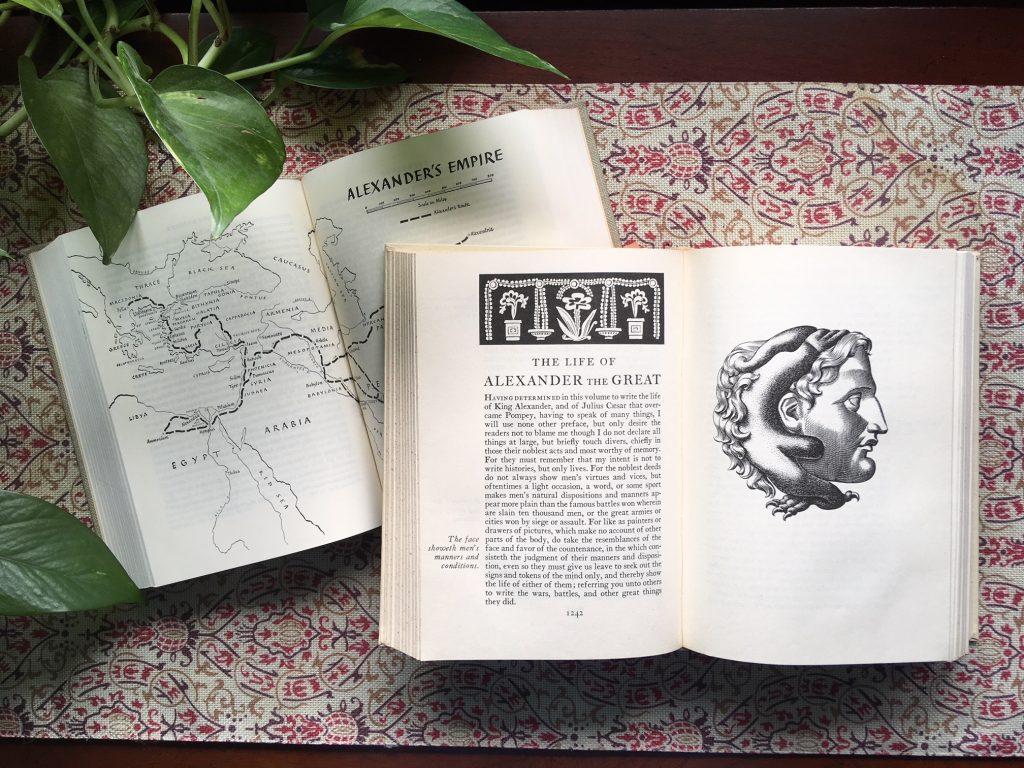
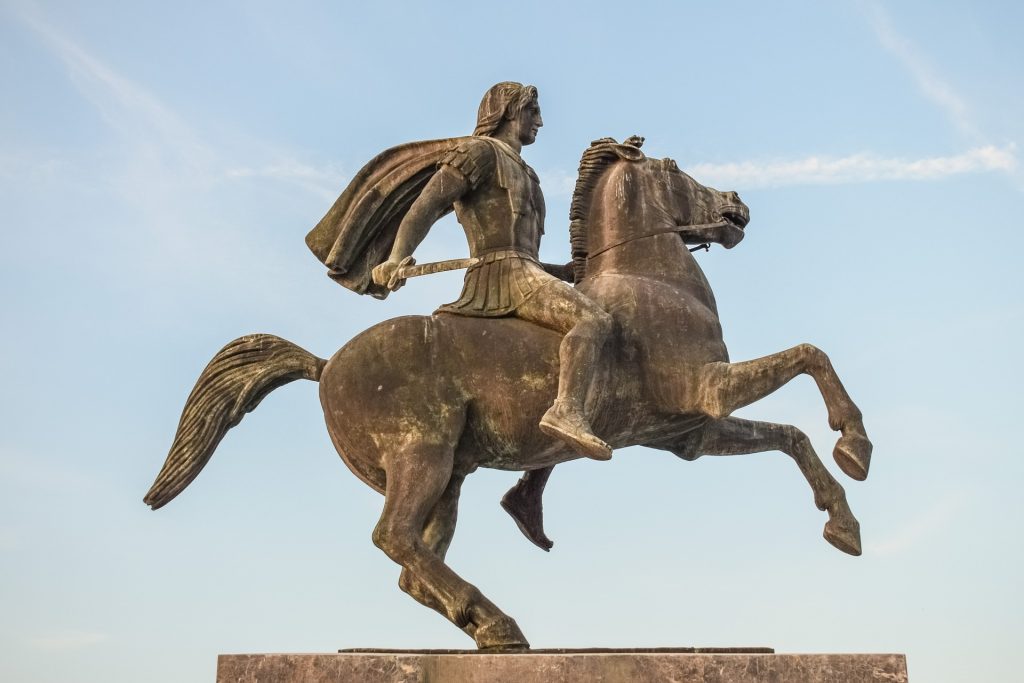
Did you know that Plutarch was born, nearly 400 years later, in Chaeronea, the site of a very strategic battle fought by Alexander beside his father, Philip II of Macedon. I like to picture Plutarch as a young boy, re-enacting the battle with his chums, wiping out battalions of elite Theban soldiers over and over again in his imagination. Perhaps this close association is one reason that Alexander was his ‘hero of heroes’ as Edith Hamilton puts it; that Plutarch ‘loved him above all other men.’
Every year, as I prepare for our study of Plutarch, I come back to the opening paragraph of the Life of Alexander the Great; it speaks to Plutarch’s purpose in writing and his choice of material. It helps me to remember to get behind the actions to the man who committed them.
What do you do to prepare for Plutarch’s Lives?
——————————————————
‘Having determined in this volume to write the life of King Alexander, and of Julius Caesar that overcame Pompey, having to speak of many things, I will use none other preface, but only desire the readers not to blame me though I do not declare all things at large, but briefly touch divers, chiefly in those their noblest acts and most worthy of memory. For they must remember that my intent is not to write histories, but only lives. For the noblest deeds do not always show men’s virtues and vices, but oftentimes a light occasion, a word, or some sport makes men’s natural dispositions and manners appear more plain than the famous battles won wherein are slain ten thousand men, or the great armies or cities won by siege or assault. For like as painters or drawers of pictures, which make no account of other parts of the body, do take resemblances of the face and favor of the countenance, in the which consisteth the judgment of their manners and disposition, even so they must give us leave to seek out the signs and tokens of the mind only, and thereby show the life of either of them; referring you unto others to write the wars, battles, and other great things they did.’ (Thomas North)
Or, the same paragraph from Plutarch: Selected Lives and Essays by Louise Ropes Loomis:
‘In writing for this book the lives of Alexander the king, and of Caesar, the conqueror of Pompey, I have before me such an abundance of materials that I shall make no other preface but to beg my readers not to complain of me if I do not relate all their celebrated exploits or even any one in full detail, but in most instances abridge the story. I am writing not histories, but lives, and a man’s most conspicuous achievements do not always reveal best his strength or his weakness. Often a trifling incident, a word or a jest, shows more of his character than the battles where he slays thousands, his grandest mustering of armies, and his sieges of cities. Therefore as portrait painters work to get their likenesses from the face and the look of the eyes, in which the character appears, and pay little attention to other parts of the body, so I must be allowed to dwell especially on things that express the souls of these men, and through them, portray their lives, leaving it to others to describe their mighty deeds and battles.’
1922 Time Table

1922 Time Table
I would like to introduce a “new” time table to the community. You can find it here. I made it in the style of the transcribed 1908 Time Table for easy comparison. I do not share this table as something for us to copy in detail in our homes but simply as a tool to help us. While studying this table has helped me to make decisions in my home, our actual tables are quite different.
I think this time table is significant for two reasons. First, if my assumptions are correct, it is the last time table we know of from Charlotte Mason’s life. She died in January 1923, and I believe this time table corresponds to Programme 94 which was used in British schools from September to December 1922. Second, it provides a lot of information that is not as easily discerned in the 1908 Time Table. [Read more…] about 1922 Time Table